
They don’t just use AI. They learn to command it.
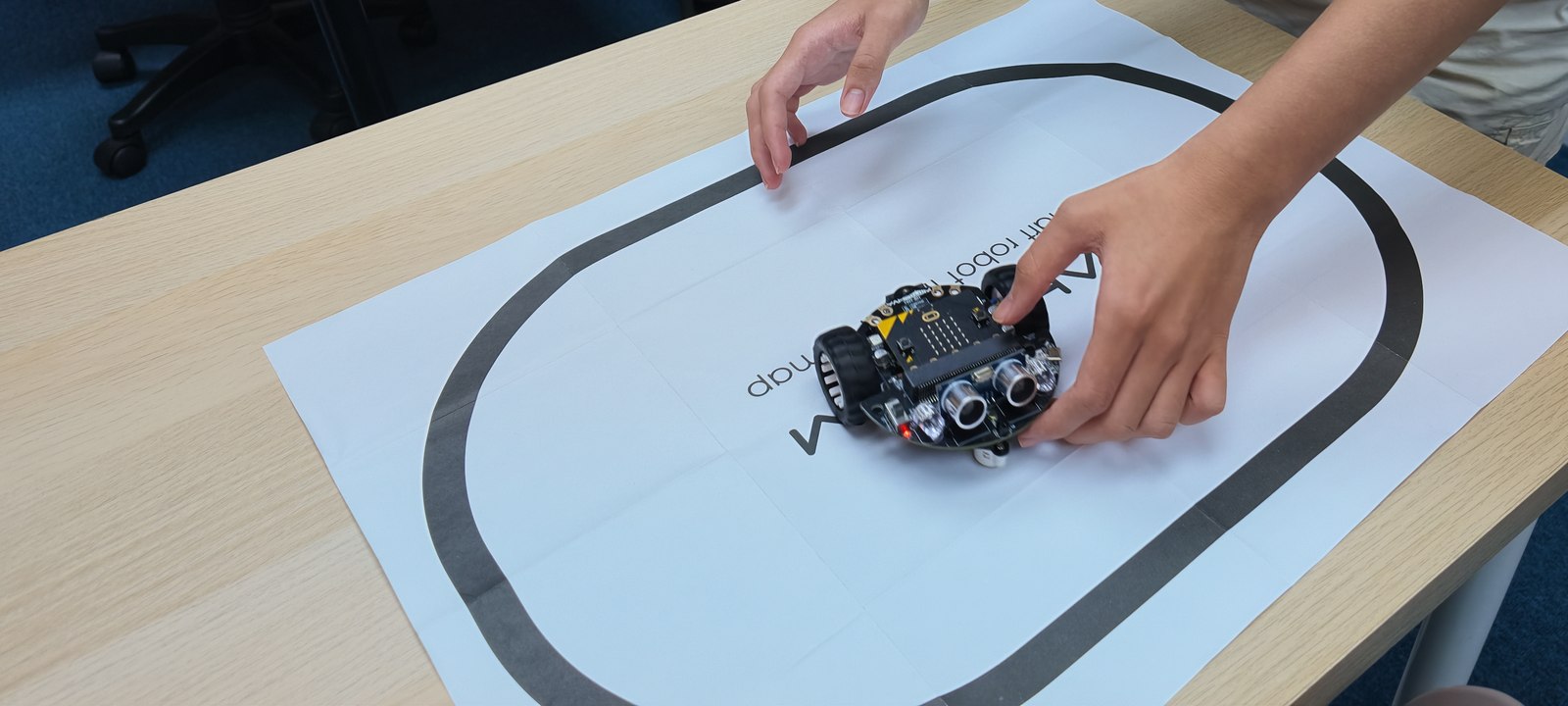
In NextGen AI Robotics, students direct AI to program their own robot car, catch it when it gets things wrong, fix the code themselves, and finish with a robot-car competition. The real skill they take away: how to get AI to do what you want, and when to trust it.
The skill that decides who thrives in the age of AI isn’t coding. It’s really using AI.
Anyone can press buttons on a chatbot. Far fewer can communicate with AI to get exactly what they want, spot when it’s confidently wrong, and know what it should never decide alone. That is what this programme builds, on a project students can watch move: a robot car.
What students actually do
Seven building lessons and a final competition, with hands-on car-building throughout.
Learn how AI works
What AI really is, why it can be confidently wrong, and how to communicate with it to get the result you want, including the specific mistakes it makes about hardware, and why.
Prompting · judgmentProgram the car with AI
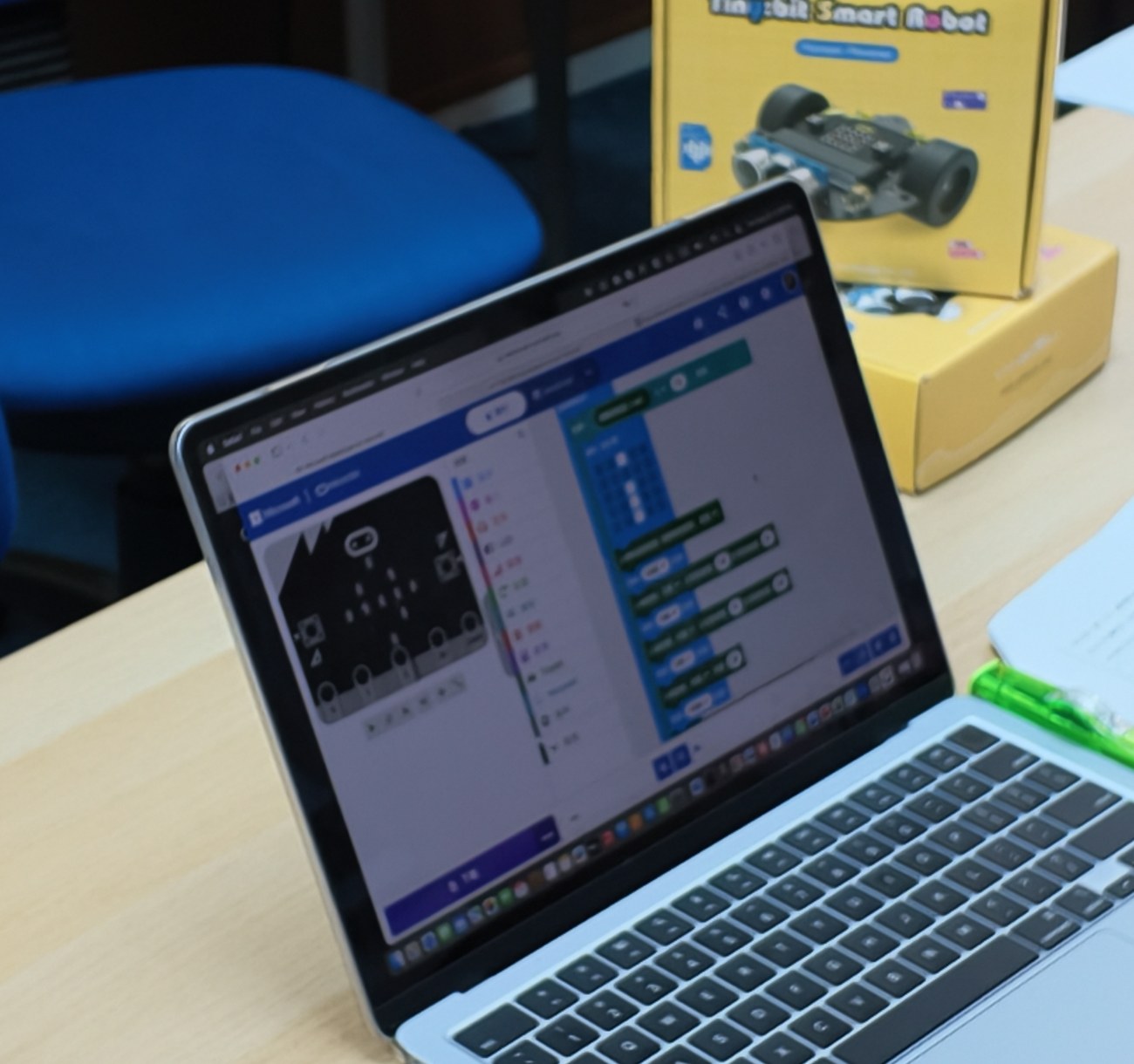
Students direct the AI to write the micro:bit code, test it on the car, find where the AI got it wrong, and fix it: follow the line, turn the corners, stop for obstacles.
Vibe coding · debuggingBuild their own AI, and judge it
They train their own image-recognition model, deliberately break it with poor data to see why it fails, then debate who is responsible when an autonomous machine gets it wrong.
Data · ethicsTune up and compete
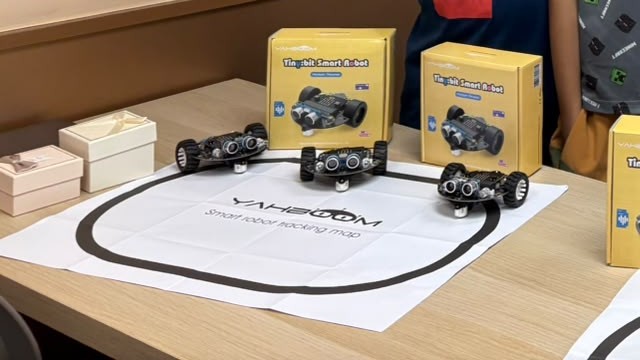
Students finish and tune their cars, then race across three stations, the speed line, the hairpin corners, and the obstacle stop, run as an open lesson for teachers and parents.
The competitionEvery lesson ends with the AI switched off.
The honest question about a course where AI writes the code is: do students actually learn anything? We designed against it directly. The research on secondary students is clear, unrestricted AI raises performance while it’s on, then leaves students measurably worse once it’s taken away. Restricting it removes that effect.
So what a school gets back isn’t a race result. It’s four measures of the student’s own thinking:
- A code-reading test, on paper, unaided: predict what the car will do and find the fault
- A catch-rate: how many of the AI’s errors they found across the course
- A two-minute oral defence: what the AI got wrong, and how they knew
- The competition result and the finished car
We ran it. It was fun, and it worked.
In our first trial class, students built and programmed real robot cars and put them through the tracking course. Their own feedback, unprompted:
Not only for the STEM students
Every student takes the same 3-lesson AI core, then chooses one 5-lesson track. One programme reaches a whole year group, across different subjects.
Robot Car
Program a self-driving robot car with AI and race it. The hands-on STEM track, finishing in the competition.
Money
Build an AI assistant for a real financial task, then stress-test and break it. Led by a practising markets professional.
Truth
Spot AI fabrication and deepfakes, run a real investigation, and publish a verdict. No hardware needed.
Built to fit your AI-for-Learning funding, and we do the paperwork.
Designed around the school’s 智啟學教 (AI for Learning & Teaching) grant. We deliver the activity and hand you the records and write-up for your report.
Taught by professionals, not a coding vendor.
NextGen AI is led by a practising asset-management professional and university lecturer, alongside a STEM instructor. It joins the in-school financial-literacy and career programmes we already run across Hong Kong.
Bring NextGen AI to your school →Envision Academy 睿博教育 · info@envisionacademy.com.hk · +852 5171 5202 · Wan Chai, Hong Kong